The buyer's briefing · Real builds, real images

Getting your IP onto Roblox without betting the budget

Your audience is already there. This page covers what an entry actually costs across the market, what a one-week playable probe looks like, how your existing assets move over, and the argument that gets a board to yes. Every image is from a real build, not a mockup.

1 · The situation

Your audience moved. The question is how you follow them, not whether.

You already know the headline: the under-30 audience plays on Roblox. The scale still surprises people. Roblox reported 132 million daily active users in Q1 2026, up 35 percent year over year, spending 31 billion hours in the quarter. The fastest-growing segment is not kids: it is 18 to 34 year olds, and older users spend meaningfully more per head. This is where a generation's game time and social time actually happens.

Sources: Roblox Q1 2026 investor results; Roblox age-verification disclosures. We only cite platform numbers from Roblox's own filings.

Every publisher we talk to says some version of the same thing next: "We know we need to be there. We do not know how to get there, and every option looks expensive and slow." That instinct is correct about the traditional options. Here is the market as it actually prices out:

Option A

Build an internal team

A first branded experience realistically needs a 6 to 12 person core team. Fully loaded, that is high six to low seven figures per year, before the game exists, plus months of ramp: Luau and the platform's design culture are a specialty. Realistic time to first ship: six months to a year.

Option B

Hire a traditional studio

A focused, single-mechanic branded activation from a competent shop runs low six figures. Flagship experiences with ongoing content from top-tier co-dev shops scale into seven figures, and that spend recurs annually once live operations are included. Typical timeline: one to two quarters.

Option C

Probe first, then decide

Put a real, playable build of your IP in front of your stakeholders in about a week, for a fixed, bounded cost. Use what you learn to size options A and B with evidence instead of guesses. This page is about option C.

Cost bands are market anchors from published industry sources and practitioner reports, not our prices.

2 · The real decision

Not "should we build a Roblox studio." Just: is a week worth finding out?

Most Roblox conversations inside publishers stall on a false binary: fund an internal team or write a large check to an outside studio. Both are big, slow, hard-to-reverse commitments made with zero platform evidence. That is why the conversation keeps ending in "not this quarter."

There is a smaller first step. A probe does three jobs at once: it shows your stakeholders what your IP feels like on Roblox (which no deck can do), it generates first-party evidence about how the platform's audience responds, and it defers the expensive build-vs-buy decision until you actually know something.

Money now, or audience now?

Direct short-term revenue is the wrong first lens for most IP holders, and the companies doing this well say so openly. Mattel's Barbie experience has drawn on the order of half a billion visits, and Mattel's own investor communications frame the program as an IP and audience strategy that earned an expanded slate. Chipotle's activation was measured by a third party at five to six times higher search and site-visit intent afterward. Treat Roblox as the place your next decade of fans already spends its time, instrument everything, and let revenue strategy follow evidence.

Strategy is downstream of evidence. Nobody should write a five-year Roblox roadmap on zero data, and with a one-week probe, nobody has to.
3 · What a probe actually looks like

Seven days after the sample pack, your team is playing this

Below is a probe-grade build from our pipeline: an original atmospheric horror game with a complete core loop. Evade an AI guardian with real pathfinding and line-of-sight detection, recover ritual relics, solve the escape, beat the clock. It took seven days of build time. Your stakeholders do not read about it; they press play, on their own accounts, on a private link.
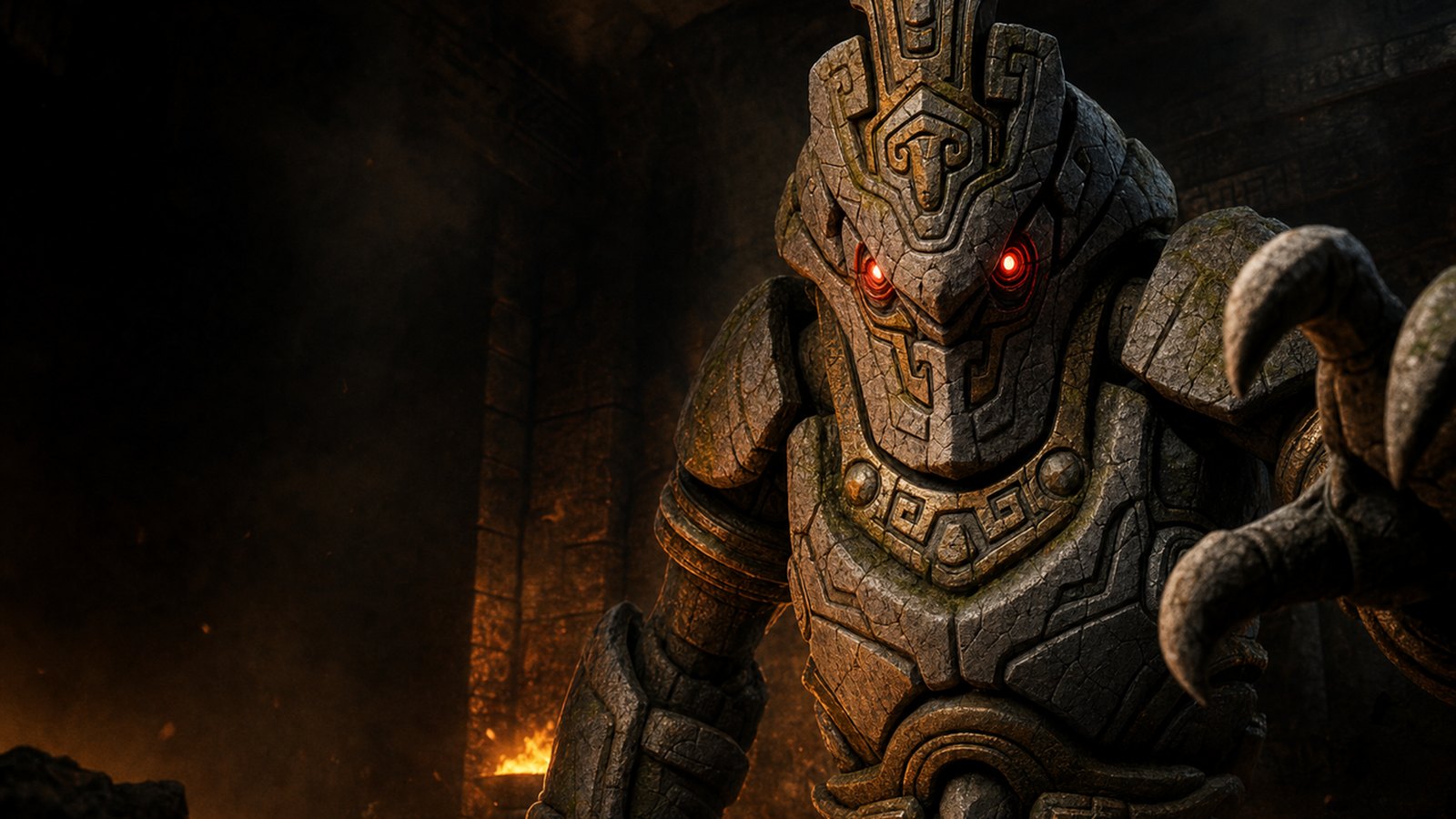

Key art of the Temple Warden stone guardian monster with glowing red eyes in a dark temple
Temple Warden key art. The guardian is a real in-game AI enemy with pathfinding and line-of-sight detection.
High definition AI concept art of an ornate gold crown with red velvet and jewels
From a text description to this: AI concept art for a hero prop, produced in minutes, matched to the game's art direction.
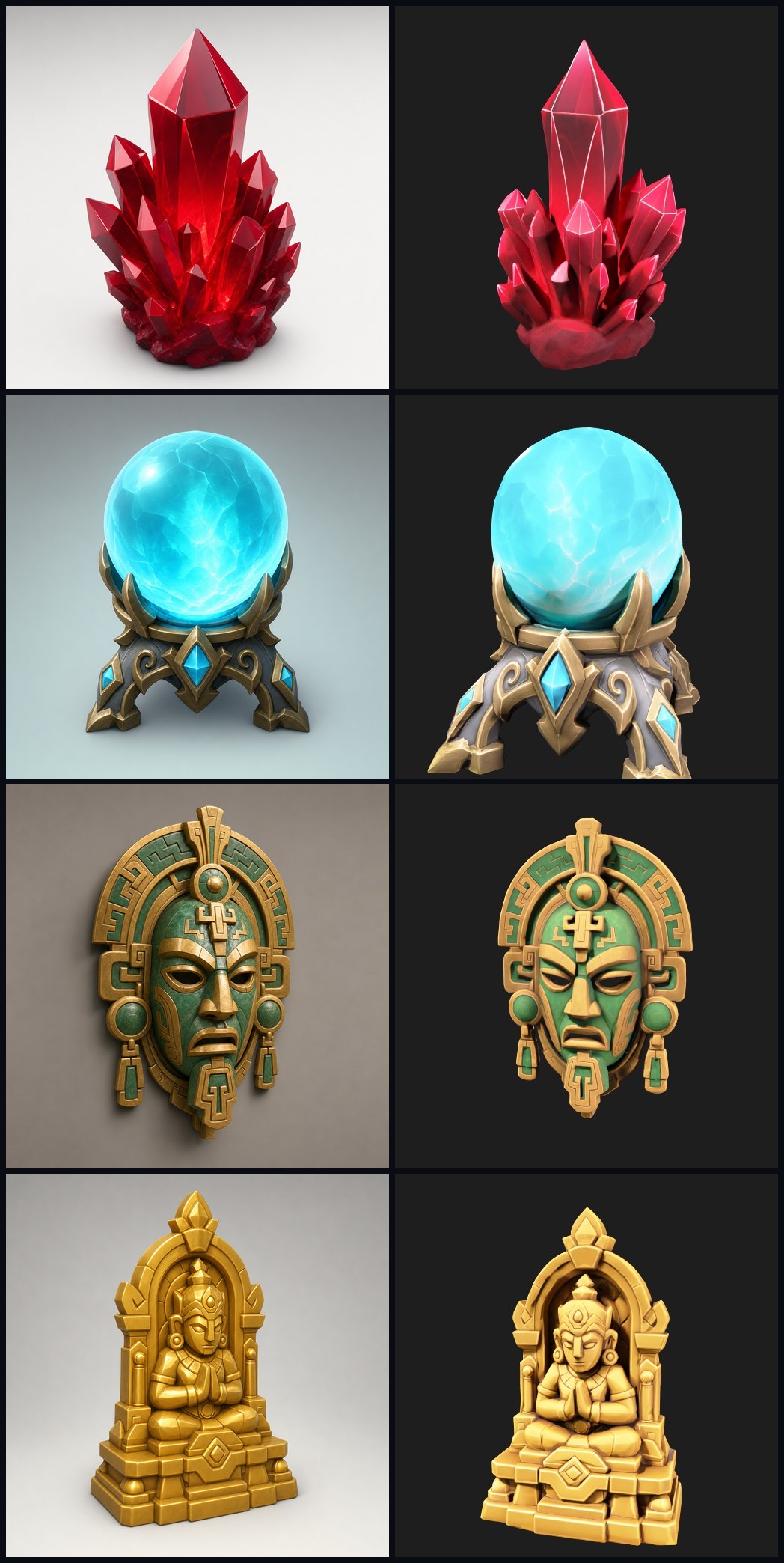
Grid comparing AI concept art with the final game-ready 3D meshes for four relic props
Concept on the left, the actual in-engine 3D asset on the right. A full prop set goes from description to textured, optimized, in-game in an afternoon.

The fastest way to answer "where does our franchise fit on Roblox?" is to see one iconic corner of it running. The probe is scoped around whatever your team decides matters most: an iconic location, a character, a mechanic your fans would recognize instantly. You tell us what has to feel right.

What you receive, in hand
1
The game itself
A complete, playable Roblox game built on your IP: full core loop, mobile-ready, analytics instrumented from the first commit. Delivered private, transferred to your Roblox account in one click, or hosted by us. Your call.
Included
2
IP Assessment
Full IP analytics on up to three of your properties: where each fits the current Roblox market, the best way to approach it, the top three game types to build for it, and the strategy we would run. Illustrated with generated concept art so the room sees it, not just reads it.
Included
3
State of the Industry Report
A researched read on the Roblox and games landscape as it bears on your entry, produced with our proprietary analytics software: genre movement, audience shifts, and where the openings are right now.
Included
4
Game Design Document, version one
The fully illustrated GDD of the direction we built: what exists after seven days, and exactly what it takes to go from this build to a shipped title. Concept art, level plans, systems, and the roadmap.
Included
5
Stakeholder access kit
A walkthrough for adding your team and stakeholders on Roblox so everyone plays it on their own account, plus our answers to whatever questions come out of the room.
Included

Everything stays private. You keep full creative control and you own what we deliver: we build the machine and the experience around assets you approve, we do not reinvent your art.
4 · Your assets already fit

Your existing art does not have to be rebuilt to live on Roblox

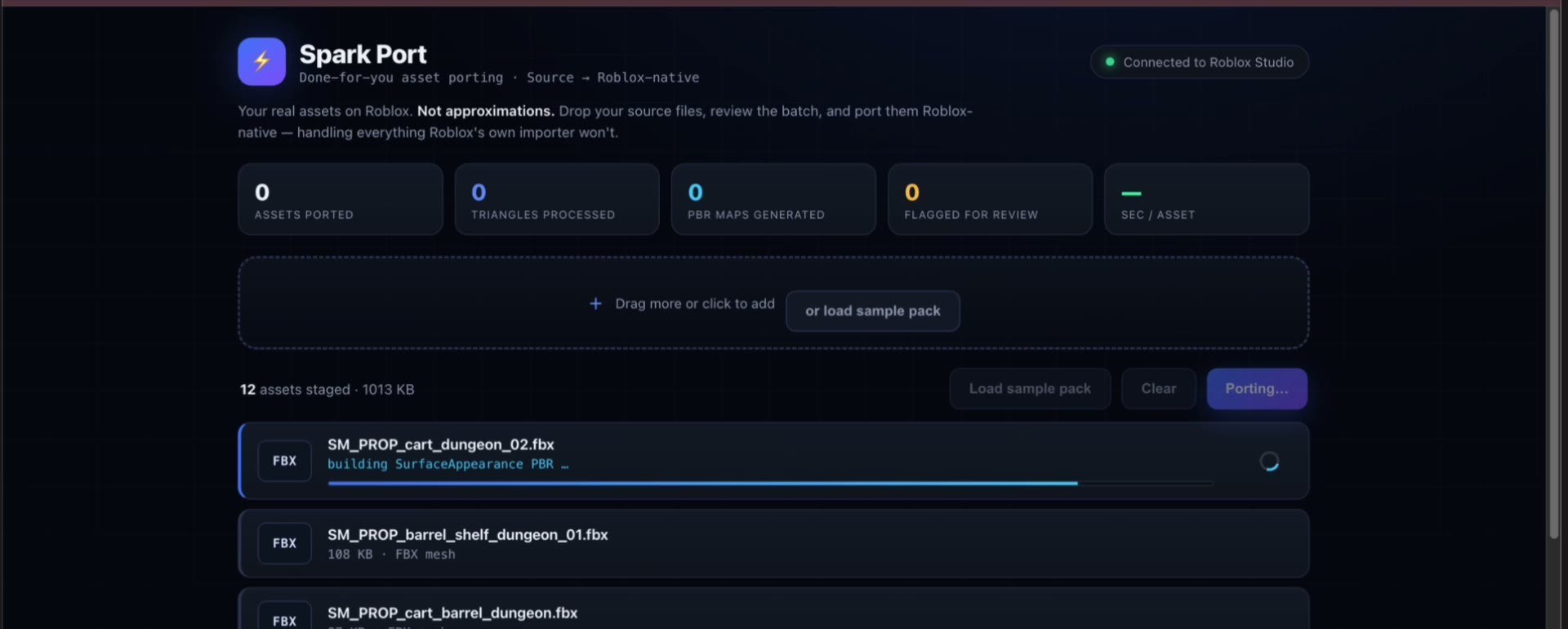
The most common false assumption we hear: "our console and PC assets will not work there, so everything has to be remade." That was true three years ago. It is not true now. Our porting engine takes standard game formats and delivers them Roblox-native, handling the parts Roblox's own importer fails at scale: triangle budgets, texture compilation, PBR material reconstruction so your art keeps its look, and per-asset validation so nothing broken reaches your experience.

Spark Port dashboard mid-run showing staged FBX assets, PBR map generation and live connection to Roblox Studio
The porting pipeline mid-run: batch staging, automatic PBR map generation, triangle processing, connected live to Roblox Studio.
651 assets
One studio's catalog, ported
Same day
Delivery
0
Failed assets

This changes the budget math on everything downstream. When the answer to "how do we get our IP onto the platform?" is "export what you already have," an activation stops being an art-production project and becomes a design project. That is a different cost class entirely.

5 · How you know it is working

You do not take our word for it. You press play, then you read the data.

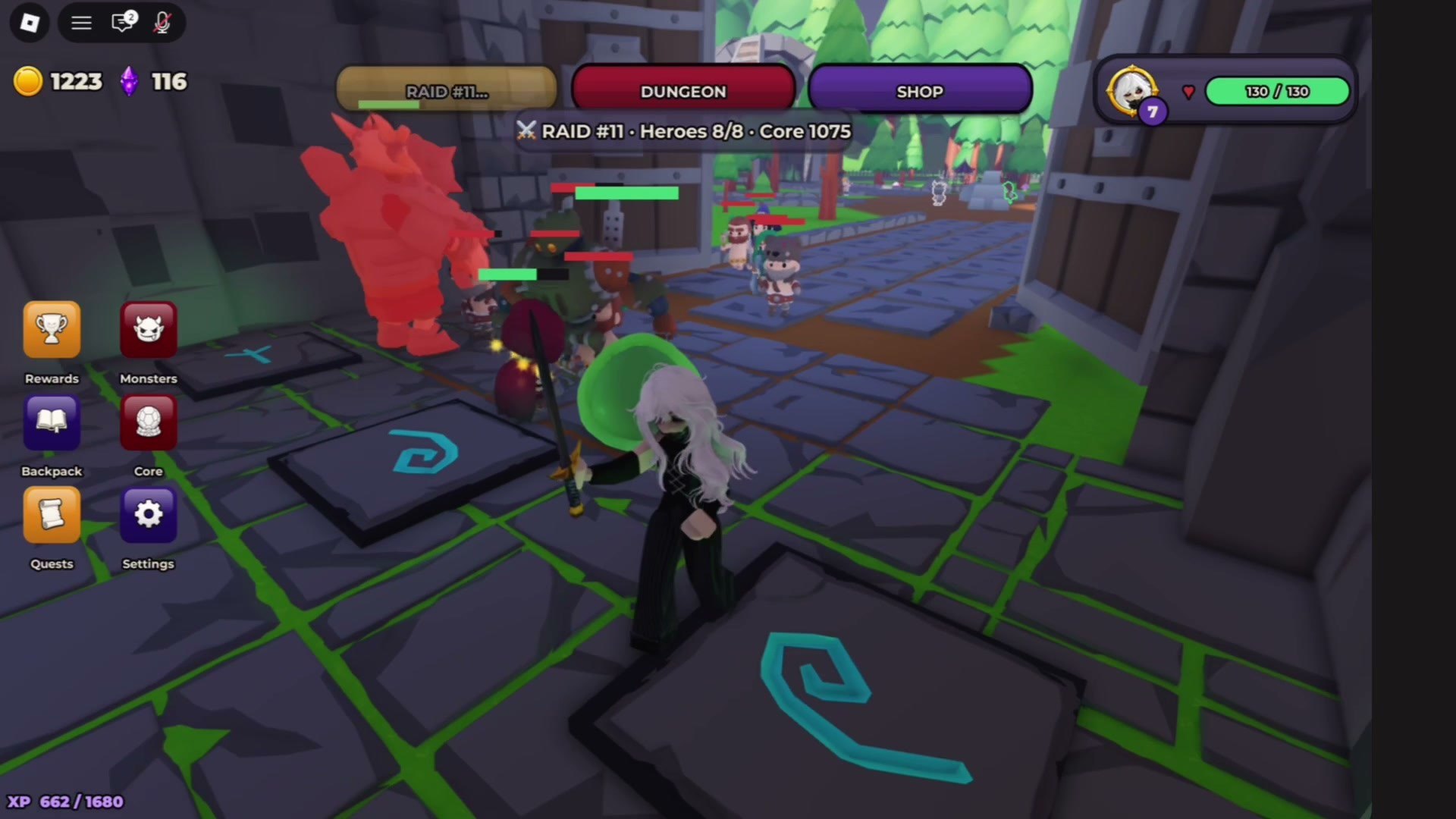
Here is a complete original game, a tycoon-defense title, whose core game was built in seven days with our pipeline, then polished and publicly launched on Roblox inside two weeks.

Live Dungeon Overlord gameplay showing a raid defense with heroes, health bars, economy HUD, shop and quest buttons
Live gameplay from the launched build: raid defense, economy, quests, shop, progression, polished HUD.

The part that matters to a publisher is not the speed. It is what shipped alongside the game: analytics wired in from the first commit. Within days of launch, that telemetry located the exact moment new players churned, down to a single encounter. Real players, real behavior, identified in days. That is the evidence loop your stakeholders get with every build.

Does the algorithm matter? Yes, and it is on your side.

Roblox's discovery system ranks experiences on per-user engagement quality: retention, session depth, how players return over their first month. Roblox states plainly that signals are computed as per-user averages so smaller experiences with highly engaged players are not disadvantaged. Two implications: a probe does not need a marketing budget to generate honest evidence, and launch-and-abandon fails here, which is why every build we deliver ships instrumented and why the follow-on conversation is about operating, not just shipping.

Capability, not prophecy: these builds show what our pipeline produces and how fast. Nobody can promise your title's performance in advance, and you should be suspicious of anyone who does. What we promise is that you will be deciding from data, not decks.
6 · Convincing the board

The internal argument, ready to use

If you are the person carrying this into a room, here is the argument in plain language. Take it as-is.

  • This is not a commitment. It is a week. We are not deciding whether to build a Roblox studio. We are deciding to spend one week finding out if we should.
  • We walk in with something real, not another deck. In about a week we have an actual playable build of our own IP. Leadership presses play instead of imagining it.
  • We get evidence before we spend real budget. The builder has shipped comparable games with live player data inside days. We would not be guessing what Roblox does with our IP. We would know.
  • It sidesteps the debate we keep having. We do not have to settle "internal team versus outside studio" to take this step. This step produces the information that settles it.
  • The downside is capped and known up front. The upside compounds. If it is not worth pursuing, we spent a small fixed amount to know that for certain. If it works, we have a tested next step and the data to make the bigger case.
  • Doing nothing is also a decision. The audience is on the platform either way. We need an answer instead of an open question at the next planning cycle.
  • This is the cheapest version of a decision we already know is coming. The Roblox question will be answered eventually. This is the version that costs the least and teaches the most.

One more thing worth saying in the room: this does not compete with your internal teams' roadmaps. It is a low-risk parallel track that produces evidence they will want too.

7 · The path

Small steps, each one earning the next

Day 0
A short questionnaire plus whatever sample assets your approvals allow. We work with what you can share; where there are gaps, we build in a matching style. Everything stays private, under NDA if you want one.
Days 1-2
Our engine analyzes the IP: audience fit on Roblox, where it lands in the current market, and two or three concept directions. You pick one, or tell us to run.
Days 3-6
The build: a complete core loop on proven Roblox design principles, your assets ported in, instrumentation wired from the first commit.
Day 7
Delivery: the full package. The private playable game, the IP Assessment, the State of the Industry Report, the version-one Game Design Document, and the stakeholder access kit. Your team plays it and makes its own judgment.
Then, if yes
A full experience builds inside roughly a thirty day window, as a support-studio engagement: we build and transfer, or build and operate, whichever fits your team. Each step is priced and scoped before it starts; no step commits you to the next one.

And if the answer after the probe is "not now"? You still own a working artifact, a market read on your IP, and the evidence to revisit the question on your timeline. Read more about the offers on the home page.

The next step is twenty minutes, not a committee.

Pick one property, or one iconic corner of one property. Seven days later, your stakeholders are playing the answer to their own questions.

Book a 20-minute call
No deck, no commitment. One call, then the build speaks for itself.